Bahrain Drone Damage Footage: Stunning Crisis Update


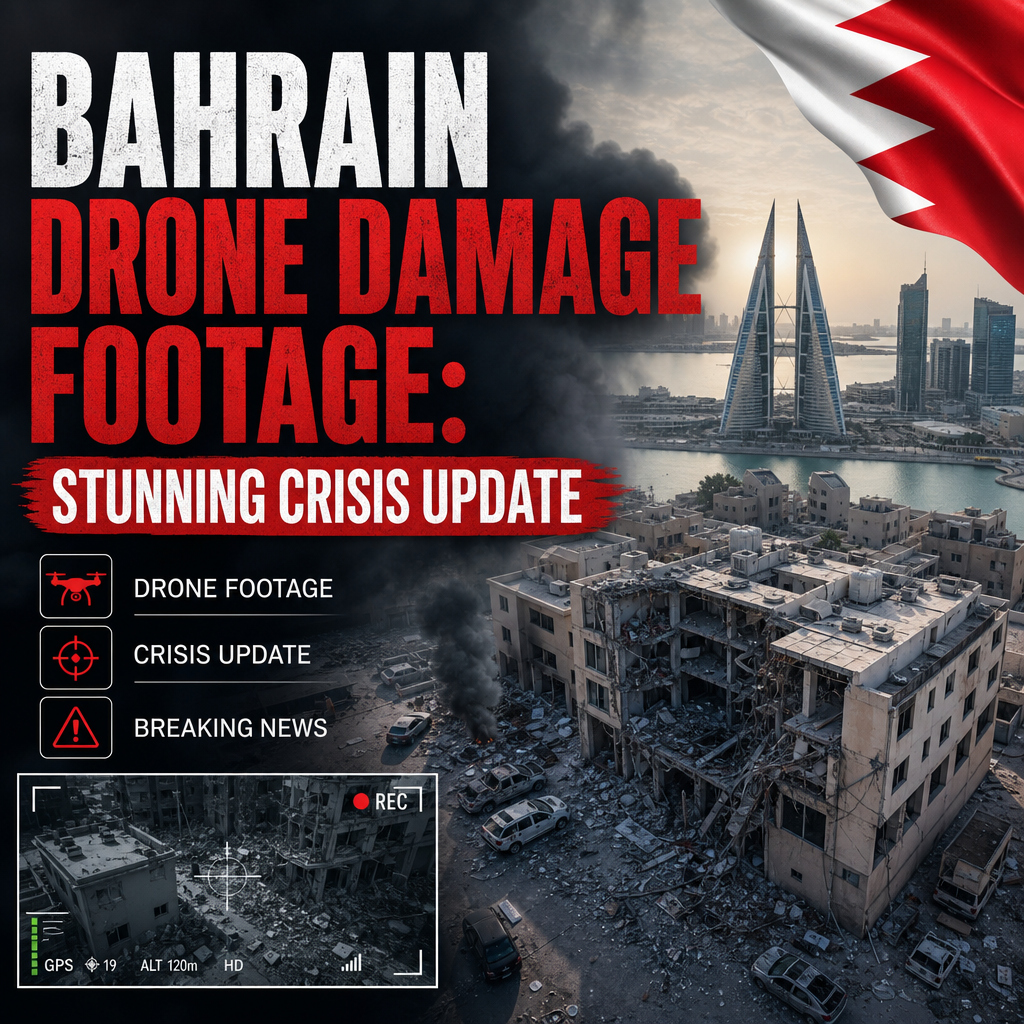
Bahrain Drone Damage Footage has put a fresh spotlight on the Gulf’s uneasy security climate, after officials released video showing the aftermath of intercepted drones and the damage they caused before being brought down. The footage is more than a dramatic visual update; it is also a reminder that regional tensions can move quickly from diplomatic language to real-world disruption, with civilian infrastructure and public confidence often caught in the middle.
The incident comes amid a broader pattern of heightened concern across the Middle East, where air defenses, cross-border attacks, and the risk of escalation are now part of the daily security conversation. Different news outlets have framed the story through their own lenses, but a few core points are consistent: Bahrain says its defenses intercepted the drones, the damage was limited but visible, and the event is being treated as a serious warning rather than an isolated episode.



What the Bahrain Drone Damage Footage shows
According to the video released by Bahraini authorities and reported by regional and international outlets, the footage captures signs of destruction left behind after the interception of drones described by officials as Iranian. The images are meant to demonstrate both the effectiveness of Bahrain’s response and the reality of what can happen even when an attack is stopped before reaching its target.
That distinction matters. In modern drone warfare, interception does not always mean no damage. Shrapnel, falling debris, blast effects, and secondary impacts can still harm property, interrupt operations, and unsettle residents. In other words, the success of air defenses may prevent a larger catastrophe, but it does not erase the threat.




The release of the footage also serves a public messaging purpose. Governments often share visual evidence in moments like this to reassure citizens, justify security measures, and shape international perception. At the same time, such footage can harden positions by making the damage visible and emotionally immediate.
Why the visuals matter politically
The timing of the release is important. Bahrain is not just showing damage; it is making a case that the threat is real, persistent, and externally driven. That message may resonate strongly with audiences already concerned about regional instability, especially in the Gulf, where commercial facilities, energy infrastructure, and transport routes have long been seen as sensitive targets.
Still, there is a difference between presenting evidence and proving the broader political story behind it. Bahrain’s attribution of the drones to Iran reflects its own security assessment, but in this kind of conflict environment, rival powers often dispute responsibility, intent, and scale. That is one reason the footage should be read as part of a broader information contest, not just as a simple report of physical damage.
How different outlets frame the same crisis
Coverage from outlets such as Al Jazeera, Sky News, and RT tends to reveal the fault lines in how this story is understood.
– Al Jazeera has emphasized the visual evidence and the regional security implications, while also situating the event within the larger backdrop of Middle Eastern tensions.
– Sky News-style reporting often focuses on the immediate facts, the defensive response, and the risk of wider escalation, particularly when drones or missiles are tied to interstate rivalry.
– RT coverage frequently highlights the geopolitical competition and the possibility that official narratives are being used to support broader strategic aims.
Taken together, those approaches show that the incident is not being viewed in a vacuum. One side stresses victimhood and defense, another stresses escalation and context, and another raises questions about motive and blame. That diversity of reporting is useful, because it reminds readers that no single account tells the whole story.
The most responsible conclusion is that the facts visible in the footage are meaningful, but the politics around them remain contested.
The bigger issue: drones are changing regional conflict
The Bahrain incident fits into a wider trend that security analysts have been warning about for years: drones are making it easier to strike, harder to defend, and more difficult to de-escalate. They are relatively cheap compared with conventional aircraft, can be used with plausible deniability, and create intense pressure on air defense systems.
That has several consequences:
– Lower threshold for conflict: Smaller attacks can still send major political signals.
– Higher pressure on defenses: Even successful interceptions consume resources and create uncertainty.
– Greater risk of miscalculation: A limited strike can trigger a much larger response.
– Civilian anxiety: Public fear can spread quickly when aerial threats become part of everyday headlines.
In Bahrain’s case, the release of damage footage suggests that officials want to show the public that the state responded decisively. That reassurance may help in the short term. But the deeper problem is that repeated incidents can normalize instability, which is harder to manage than a single attack.
A cautious reading of the evidence
The evidence available so far supports a straightforward but serious interpretation: Bahrain intercepted drones, damage occurred, and the government is using the footage to document the event and underline the threat. What remains less certain is the larger strategic meaning. Was this a one-off escalation, a message aimed at Bahrain specifically, or part of a wider regional pattern of pressure? That depends on information that may not be fully available yet, or that may be disputed by the parties involved.
For now, the most balanced view is that the footage is both proof and warning. It proves that the incident happened and that it caused visible harm. It also warns that even apparently contained drone attacks can have outsized political effects, especially in a region where trust is thin and tensions are already high.
The Bahraini release is therefore not just a crisis update. It is a window into how modern conflict is increasingly fought—through short, deniable, highly visible acts that force governments to respond under pressure. And in that sense, the real story is not only the damage on the ground, but the fragile security environment that made the images worth releasing in the first place.